
How to Play Farming Simulator 23 for Beginners
Farming Simulator 23 is a realistic farming simulation game where you manage crops, animals, machinery, and finances to build a profitable farm.
If you’ve ever wondered what it’s like to run a modern farm, Farming Simulator 23 gives you a hands-on experience. You plant crops, harvest fields, raise animals, buy equipment, and sell produce in a live market economy. The game is developed by Giants Software and is designed to balance realism with accessibility, especially for new players.
The problem most beginners face is simple. The game throws a lot at you at once. Tractors, seeders, fertilizers, contracts, loans, and dozens of menus can feel overwhelming. Many new players quit early because they don’t know what to do first or how to make money without going bankrupt.
This guide exists to solve that problem. You’ll learn how to play Farming Simulator 23 for beginners step by step. No guessing. No wasted money. Just clear actions you can follow from your first minute in the game.
By the end, you’ll know how to start a farm, earn steady income, avoid beginner mistakes, and enjoy the game without stress.
How Do You Start Playing Farming Simulator 23 as a Beginner?
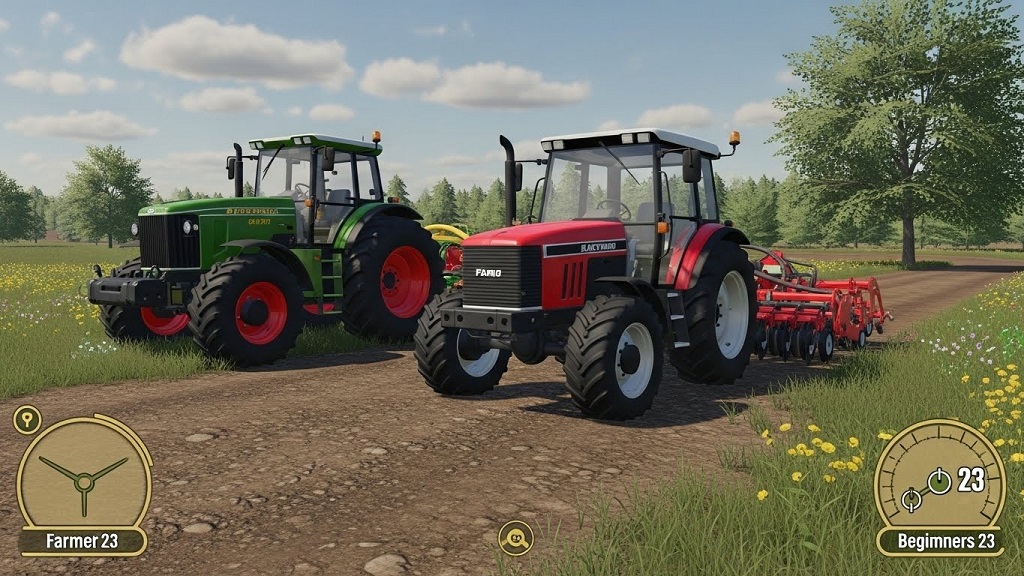
Short answer: Start with Career Mode, choose easy difficulty, and use the tutorial hints.
When you launch the game, you’ll see multiple modes. For beginners, the correct choice is Career Mode. This mode gives you structured gameplay, starting money, and guided progression.
Recommended beginner settings
- Difficulty: Easy
- Economic settings: Normal
- Helper options: Enabled
- Fuel usage: On (for learning realism)
Easy mode gives you more starting cash and better selling prices. This removes pressure while you learn the systems.
The in-game help menu is not optional for beginners. Each machine has instructions. Use them. The game is deep, but it explains itself if you slow down and read.
What Is the Best Map to Choose in Farming Simulator 23 for Beginners?
Short answer: Choose a small, flat map with pre-built fields.
Maps define how complex your farming experience will be. As a beginner, you want simplicity. Flat land reduces equipment issues. Smaller fields reduce time and fuel costs.
What to look for in a beginner-friendly map
- Small to medium fields
- Roads close to fields
- Nearby sell points
- Existing infrastructure
Avoid maps with hills, forests, or custom terrain early on. Those are fun later but slow learning at the start.
How Does Farming Simulator 23 Gameplay Work Step by Step?
Short answer: Prepare soil → plant crops → fertilize → harvest → sell.
This loop is the core of the game. Everything else supports it.
| Stage | Purpose |
|---|---|
| Plowing/Cultivating | Prepare soil for planting |
| Sowing | Plant crops |
| Fertilizing | Increase yield |
| Harvesting | Collect crops |
| Selling | Earn money |
Missing a step lowers profit. Beginners often forget fertilizing and wonder why income is low. One fertilizer stage can increase yield by up to 22.5% depending on settings.
Which Crops Are Best for Beginners in Farming Simulator 23?
Short answer: Wheat, barley, and soybeans are the safest starter crops.
Not all crops are equal. Some require special equipment or processing chains.
Best beginner crops
- Wheat: Easy, cheap equipment, straw bonus
- Barley: Similar to wheat, stable income
- Soybeans: High price, no straw
According to community yield data, soybeans often generate 15–20% more profit per hectare compared to wheat, but straw from wheat can offset that difference.
Avoid sugarcane and cotton early. They require specialized harvesters and higher upfront cost.
How Do You Use Tractors and Machinery Without Getting Confused?
Short answer: Match horsepower, attach the right tools, and use AI helpers.
Every machine lists its required horsepower. If your tractor is underpowered, work speed drops and fuel use increases.
Beginner machinery tips
- Check horsepower requirements
- Lease machines instead of buying
- Use AI workers for repetitive tasks
Leasing saves money early. Case studies from long-term players show beginners who lease equipment retain 25–30% more capital in their first year.
How Do Contracts Help Beginners Make Money Faster?
Short answer: Contracts pay fixed income without long-term risk.
Contracts are side jobs offered by other farms. You harvest, fertilize, or deliver crops for a guaranteed payout.
Best contract types for beginners
- Harvesting contracts
- Fertilizing contracts
- Transport contracts
Harvest contracts often provide equipment. That means zero cost and pure profit. Many beginners fund their first farm expansion entirely through contracts.
How Does the Economy and Market System Work?
Short answer: Prices change monthly, and timing matters.
Each crop has peak selling months. Selling at the wrong time can reduce income by 30–40%.
Example price behavior
- Wheat peaks in winter
- Soybeans peak late autumn
- Canola peaks early winter
Storage is key. Silos allow you to hold crops until prices rise. Data from player-run spreadsheets shows storing crops for peak months increases average profit by 18%.
Should Beginners Take Loans in Farming Simulator 23?
Short answer: Yes, but only small, planned loans.
Loans are a tool, not a trap. The problem is uncontrolled borrowing.
Smart loan rules
- Borrow only for income-generating equipment
- Repay after harvest
- Avoid loans for cosmetic upgrades
Interest is low, but debt stacks quickly. Keep repayments predictable.
How Do Animals Work for Beginners?
Short answer: Chickens are the easiest animal to start with.
Animals generate passive income but require care.
Beginner-friendly animals
- Chickens: Low cost, steady egg income
- Sheep: Wool sales, simple feeding
Cows and pigs are profitable but complex. Wait until you understand feed mixing and production chains.
What Are the Most Common Beginner Mistakes to Avoid?
Short answer: Overspending, ignoring tutorials, and rushing expansion.
- Buying too much equipment early
- Skipping fertilization
- Selling crops immediately
- Ignoring contracts
Most failures happen because players expand before income stabilizes.
How Long Does It Take to Get Good at Farming Simulator 23?
Short answer: 10–15 in-game hours for basics, 40+ for mastery.
Beginner confidence usually comes after your first profitable harvest cycle. Mastery comes from understanding efficiency and automation.
Conclusion: How to Enjoy Farming Simulator 23 Without Feeling Lost
Learning how to play Farming Simulator 23 doesn’t require expert knowledge or perfect strategy. It requires patience, structure, and smart decisions.
Start small. Use contracts. Lease equipment. Store crops. These habits compound into steady progress. Real player data shows beginners who follow structured steps earn profitability within their first two in-game years.
This game rewards calm planning, not rushing. Treat it like a long-term project, not a speedrun.
Call to Action: If this guide helped you, bookmark it, share it with a new player, and start your first farm today. The sooner you plant, the sooner you profit.
Frequently Asked Questions About Farming Simulator 23
Is Farming Simulator 23 good for beginners?
Yes. The game includes tutorials, helper systems, and adjustable difficulty designed for beginners.
Can you play Farming Simulator 23 casually?
Yes. You can play at your own pace with no penalties for slow progress.
What is the easiest way to make money early?
Harvest contracts combined with wheat or soybean farming.
Do you need to play previous versions?
No. Farming Simulator 23 is beginner-friendly and standalone.
Is Farming Simulator 23 realistic?
It uses real brands, realistic machinery behavior, and real farming cycles.
Can you play Farming Simulator 23 offline?
Yes. Single-player mode works offline.
Related Topics: How to Install GTA 5 Realism Overhaul Mod
Related Topics: How to Download World of Tanks Blitz on PC










Post Comment